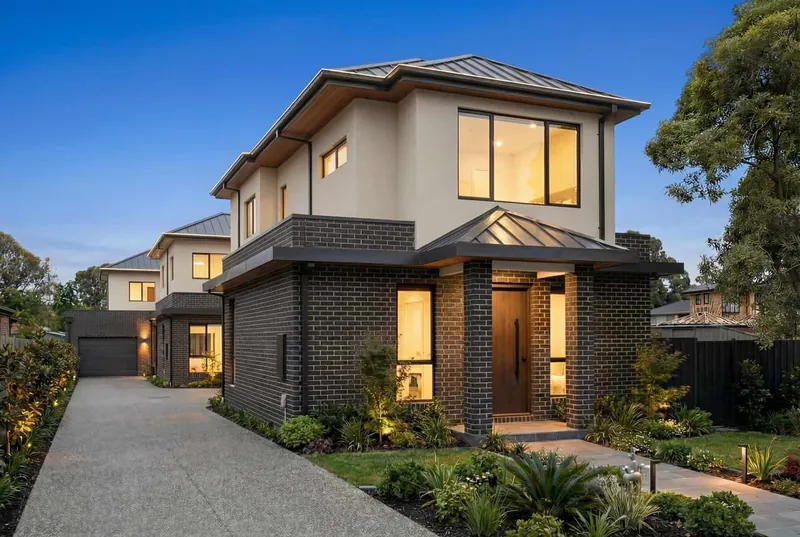
When designing any type of housing, it is important to consider several general principles to execute your project effectively. Especially when it comes to townhouse development in Victoria.
Whether you’re an amateur or an experienced professional, it’s common to feel lost in your townhouse development plans and projects from time to time. However, some key principles form the basis of every great property development strategy.
To explain the whole process from an expert’s point of view, we will share 8 key principles you should adhere to for successful townhouse development in Victoria or any other state.
So let’s get straight into it!
Townhouse Development Principles
1 . Planning
Planning your every step is the most significant factor in determining a successful townhouse development. Under Victoria’s Planning and Environment Act 1987, councils have 60 statutory days to assess a standard planning permit application — but in practice, complex residential applications in metropolitan Melbourne often take considerably longer. Inadequate pre-application planning is the leading cause of these delays, making upfront research the single highest-leverage investment a developer can make. Whether conducting market research, surveys, design research, or planning regulations research, you must prioritise planning over expense.
Surveys, studies, and research will allow you to make an informed decision at every stage of your townhouse development. We always advise our clients to stick to this one principle for every project unconditionally because thorough planning lays the foundation of every successful townhouse.
A critical part of that planning is understanding the key instruments that will govern your application. ResCode (Clauses 54 and 55 of the Victoria Planning Provisions) is the state-wide standard that governs all residential development in Victoria. It sets mandatory and discretionary requirements for site coverage, building setbacks, private open space, overlooking, overshadowing, and landscaping. For townhouse developments specifically, Clause 55 applies to two or more dwellings on a lot and is the primary assessment framework councils and VCAT use to evaluate your permit application. Familiarising yourself with ResCode requirements before engaging a designer will save significant time and cost downstream.
2. Feasibility
If you neglect to evaluate your site’s value and its design practicality, you’ll essentially be setting yourself up for failure or an utter disaster. That’s why feasibility is crucial to any townhouse development plans.
Feasibility studies allow you to determine the risk possibility and whether it’s worth taking. A rigorous feasibility study tests whether the land cost, build cost, holding costs and GST leave a workable developer’s margin, and can surface red flags before a single dollar is committed to design. In fact, a comprehensive feasibility helps distinguish real opportunities from investments that would most likely fail or are simply bad investments.
In our experience across 210+ Melbourne projects, the most common reason townhouse developments fail financially is not poor construction — it is a feasibility study that modelled optimistic sale prices without stress-testing for a market downturn. A robust feasibility must include a downside scenario. If you’re about to invest in a property development venture, you must know how experts bring years of experience and state-of-the-art consultation, which should never be compromised.
3. Efficiency
Organising and completing your project right the first time is important to save your townhouse building costs and loss during construction. The key is making efficient townhouse development plans and designs and implementing them even better.
Sticking to the first two principles will naturally make your townhouse development more efficient in terms of cost, time, and effort. Pre-application meetings with council planners — available at no cost through most Melbourne metropolitan councils — can resolve design objections before formal lodgement, reduce delays, and create a documented record that strengthens your application. Consulting the council before filling in paperwork to understand your site’s expectations is therefore not just a courtesy — it is a measurable efficiency strategy.
4. Quality
The better your townhouse stands, the more profit it brings you. Do not hesitate to invest in higher quality products and professional services because they’re bound to come back to you tenfold shortly.
There are always better ways to save on expenditure, like utilising space better, using high-quality material from a local vendor, and recognising opportunities hidden in the land and location you’re about to build on.
5. Timing
Know the market and economy before choosing to build a townhouse. Timing to build and sell is crucial to make your townhouse development a profitable venture.
Property development is similar to stock investments when it comes to analysis. Make sure you time your investment according to the market economy and stay in touch with relevant information weeks before you buy a land or start your development.
6. Finance
Rather than depending on rough estimates, planning your budget and securing finance is also important in a townhouse development. A feasibility study offers you a different perspective on expense and profit. Know your financial options and limitations before going all-in for a townhouse development project.
7. Target
Applying zoning, demographics, and neighborhood research ensures that you’re planning your townhouse for the right people you wish to target or fit in with your surroundings enough to attract tenants or buyers in the future.
8. Unique selling point
Think carefully about your USP and ensure your townhouse design is unique and aesthetically appealing to attract more interested buyers. Although sticking to regulations and conventions is important, planning for the future to keep your property value high is also necessary as a property developer.
Know How These Principles Work In Action
These 8 principles are the essence of our years of experience consulting, designing, and building some of the best townhouse developments in Victoria. While knowing them will be a game-changer for you in property development, sticking to these principles can be tough.
If you want to learn more about how townhouse development in Melbourne works, Consult our experts and find out how you can succeed in your next townhouse development!
SQM Architects – ABN 32 600 928 390, ARBV Reg. No. 51498
Get the 7-point site check to run before committing to a permit application — zoning, overlays, setbacks and council red flags, in plain English. Free PDF, instant download.
- Zone, overlay & setback checks
- What council assesses first
- Permit-readiness red flags
Something went wrong. Please try again.
No spam. Unsubscribe anytime.
Check your inbox — your checklist is on its way.